
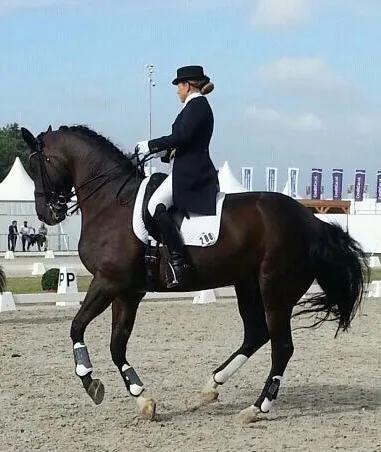
Dressage is the foundation that virtually everyone starts with. In dressage you learn to ride a horse with correct posture and seat and with the right aids. Once you are further along in your training, you may be ready for new riding challenges or deeper instruction. How you give the correct aids to control the horse and execute figures, and maintaining your correct posture and seat, remain very important. But from this level onwards, the way the horse moves and how this is influenced by you become increasingly important. Dressage has a number of basic principles: the scale of training for a horse. This is used as a guideline when assessing dressage tests from class BB and B onwards. The scale consists of: rhythm, relaxation, connection and throughness, activity and impulsion, straightness and collection.
On the KNHS website, a 'Learning to Ride article' has been published every week for over six months with tips on riding in general and dressage in particular. Below you will find them listed in order of difficulty.
Do you have any questions about the content of the articles? Ask your instructor to help you.
Mounting and dismounting
Adjusting stirrups
The Seat
The Walk
The Trot
The Canter
The Aids
Weight aids
Leg aids
Rein aids
Riding feel
Rules in the arena
Riding turns correctly
Steering
Bend and flexion
Neck stretches
Relaxation exercises
Activity and impulsion
Tempo changes
Riding transitions
The sitting trot
Sitting deep
Riding circles
Riding serpentines
Halting and saluting
Connection and throughness
Yielding to the leg
Head and neck position
Straightness
The horse's balance
Rein backShoulder fore
Collection
Gymnasticizing and training results
The ideal picture
Test-focused riding